Education · 19 November 2026
H. pylori and stomach ulcers: testing, treatment, and stomach cancer prevention
Read the original coverage
About half of people worldwide carry Helicobacter pylori (H. pylori) in the stomach. Many never feel ill. Left untreated, the same infection can cause chronic gastritis, peptic ulcers, and, over many years, most cases of stomach cancer.
What H. pylori is
H. pylori is a spiral-shaped bacterium that lives in the stomach lining and can remain there for decades. Most people acquire it in childhood. It spreads through close contact, saliva, contaminated food, and unsafe water, and it often passes between people who live together.
How ulcers form
The stomach protects itself with a mucus layer. H. pylori weakens that layer, so acid can injure the lining and leave a sore in the stomach or the duodenum. Infection and painkillers such as ibuprofen, diclofenac, and aspirin are the two most common causes of peptic ulcers.
- Burning or gnawing pain high in the abdomen
- Bloating, nausea, or feeling full soon after starting a meal
- Pain that gets better or worse after eating
- No symptoms at all — this is common
Black stools, vomiting blood, unexplained weight loss, trouble swallowing, anaemia, or new stomach symptoms after age 50 need prompt medical care. People with a family history of stomach cancer should not wait until 50.
The link with stomach cancer
In 1994 the World Health Organization's International Agency for Research on Cancer (IARC) classified H. pylori as a Group 1 carcinogen, the same category as tobacco. Long-term infection can change the stomach lining step by step: inflammation, thinning of the glands (atrophy), intestinal metaplasia, dysplasia, and then cancer. That sequence usually takes many years, which is why finding and treating the infection early matters.
What changed in 2026
On 11 March 2026, IARC published guidance in The New England Journal of Medicine on population screen-and-treat programmes for stomach cancer prevention. The working group confirmed that H. pylori is the main cause of stomach cancer. Across randomized trials, treating the infection reduced new stomach cancer cases by about 36% and stomach cancer deaths by about 22%.
The report asks health systems to find infection in people who still feel well and treat it before the lining is badly damaged. It also stresses reliable non-invasive tests, treatment chosen for local antibiotic resistance, and a check that the infection is actually gone.
Who should be tested
- People with a peptic ulcer now or in the past
- People with indigestion that keeps returning
- People with a family history of stomach cancer
- Household contacts of someone known to have H. pylori, when a doctor advises it
- People starting long-term aspirin or other painkillers
- People from regions where infection and stomach cancer are more common, including parts of East Asia
How testing works
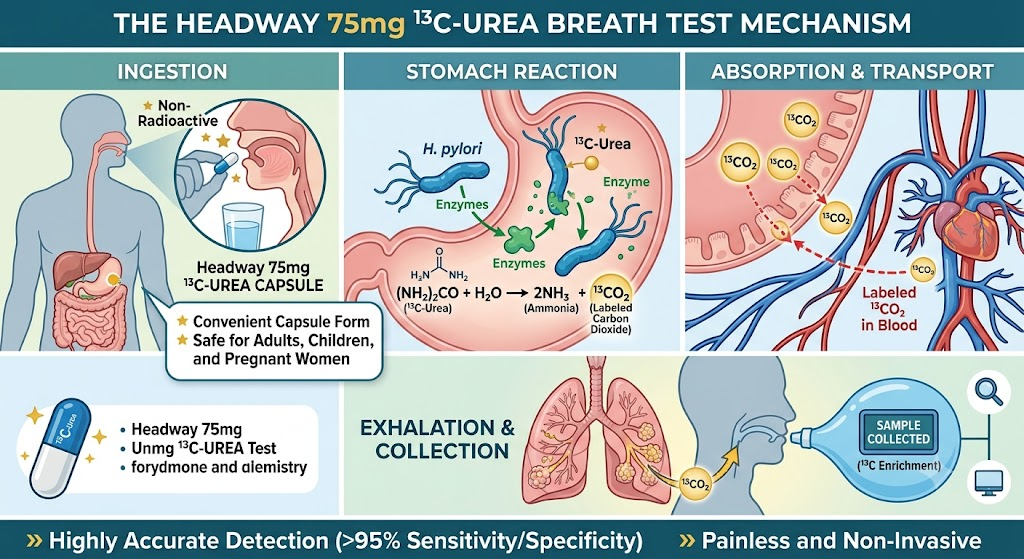
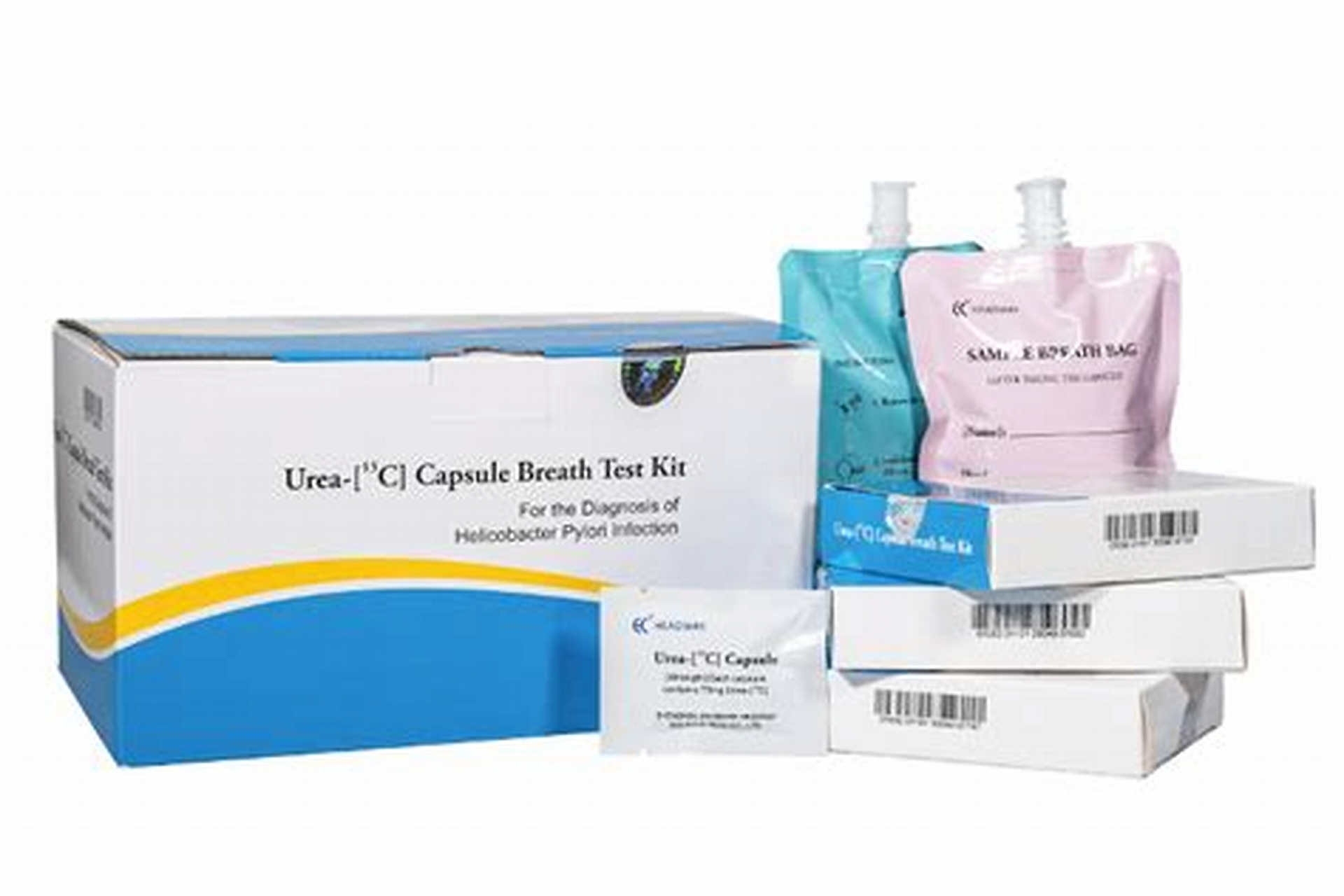
Active infection is usually checked with a urea breath test, a stool antigen test, or biopsies taken during endoscopy when a camera examination is already needed. A breath test is non-invasive: the patient swallows labelled urea, and if H. pylori is present its urease enzyme releases labelled carbon dioxide that can be measured in the breath.
Acid-reducing tablets such as omeprazole or pantoprazole can hide a current infection and cause a false negative. Stop them only if your doctor agrees, often for about two weeks before a breath or stool test. A blood antibody test cannot tell a past infection from one that is still active, so it is not used to confirm a cure.
Treatment is chosen by a doctor
Antibiotic resistance is now common. Older clarithromycin triple therapy often fails. Current guidance usually prefers a 14-day bismuth quadruple regimen, because it is less affected by clarithromycin resistance. Where it is available, vonoprazan, a stronger acid blocker, is another option. The right combination depends on local resistance and on allergies.
- Finish the full course, even if symptoms improve
- Do not skip doses
- Have a test of cure at least four weeks after treatment, with a breath or stool test
- If treatment fails, the next course should use different antibiotics
Lowering stomach cancer risk
- Test and treat H. pylori when it is indicated
- Do not smoke, and limit alcohol
- Eat less very salty, smoked, and pickled food, and more fresh fruit and vegetables
- Do not take painkillers for a long time without medical advice
- Drink safe water
Clearing the infection lowers risk substantially. If the stomach lining has already changed — atrophy or intestinal metaplasia — some risk remains, and a doctor may recommend regular endoscopy. This page is general education, not a diagnosis or a prescription.
Ask about urea breath testing
Contact our team for product enquiries or diagnostic services.